
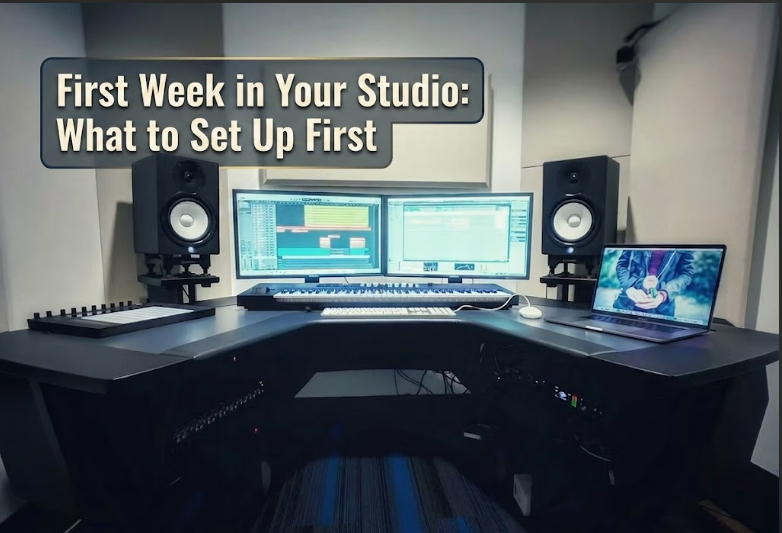
Ask most people how their first week in a new studio went and you’ll hear some version of the same story. They did too much too fast, placed things they’d later regret, and spent the next three months quietly working around decisions that calcified before they understood the space. They weren’t careless. They were just working in the wrong sequence, and in a studio, sequence is everything.
A larger apartment tolerates bad early decisions. The wrong sofa goes to the spare room. The shelf that blocks the light in the bedroom gets moved to the hallway. A studio has no such forgiveness. Every object you commit to shapes what can happen next. The bed placement determines the wardrobe wall. The wardrobe determines the workspace. The workspace shapes what lighting you need on that side of the room. Pull on the wrong thread early and the whole layout follows you into it.
First week setup is about getting stable, not getting done.
1. Day One Has a Single Job
Get yourself to the point where you can sleep, use the bathroom, and make something to eat. That’s the whole agenda. Genuinely.
Your mattress and bedding come first, but the frame does not have to. A mattress on the floor for a few nights while you figure out what kind of base actually makes sense for your layout is not an embarrassing compromise. It’s a smart one. Whether a raised platform with drawers works, a low-profile base, or something else entirely, that decision changes significantly once you’ve understood how much storage you have everywhere else in the apartment. Commit to a frame before you’ve lived there and you’re guessing. The complete guide to moving in on day one covers the full picture of what day one should actually look like, but the short version is this: sleep setup, bathroom basics, minimal kitchen function. Stop there.
For the bathroom, towels and toiletries. Not an organization system. Just enough to use the room.
For the kitchen, one pot, one pan, a knife, a cutting board, a couple of plates. If you have a kettle, great. Everything else stays in boxes, because you cannot know yet which drawer wants to be the spice drawer and which counter real estate is going to become your primary prep zone. The kitchen will tell you. Give it two days.
2. Days Two Through Four: Systems Before Style
The middle stretch of your first week is for getting the functional systems working. Not the aesthetic. Not the furniture arrangement. Just the daily-life systems.
Kitchen first. Unpack and arrange, but do it after you’ve cooked two or three actual meals in the space. This sounds like patience for its own sake, but it isn’t. You will learn things about your kitchen by using it that no amount of staring at the layout will reveal. The shelf you planned for above the stove turns out to be blocked by the range hood. The corner cabinet opens in a way that makes it nearly impossible to access while standing at the counter. The fridge sits slightly closer to the wall than the listing suggested, and your preferred spot for the toaster is now a tight squeeze. All of this information matters before you buy organizers or pantry systems.
Clothing comes next. This one you can approach more decisively because you know your own wardrobe. The challenge is purely spatial. If the closet can hold what you need, do a basic hang-and-fold setup and move on. If it can’t, which is common, do not immediately go out and buy a freestanding wardrobe. Wait until you’ve seen the whole room laid out. A wardrobe placed before you’ve understood your traffic flow can cut off the one window delivering real afternoon light, or block the only wall you’d have used for a workspace. The piece on why your studio closet feels impossible is worth a read before you make any storage commitments.
Lighting is the one system people push to week three, and that timing is too late. If the apartment came with a single overhead fixture, you already have a problem worth solving early. One overhead light flattens a room. It removes depth, it erases any sense of zones, and it makes the whole apartment feel like a break room. Two plug-in table lamps placed thoughtfully do more to define the space than almost anything else in week one. Studio Apartment Setup has a detailed piece on why one overhead light is the setup mistake that ruins everything, and reading it before you get further into the layout process will save you from needing to redo a lot of decisions later.
3. What to Deliberately Leave Alone
This is the section most first-week guides skip. It’s also the most valuable one.
Large furniture placement should not be finalized in week one. Sofas, dining setups, shelving intended to act as room dividers, any piece that will define a zone or anchor a wall: all of that stays flexible for at least five to seven days. The reason is simple. You do not yet know how you actually move through the space.
You don’t know which corner naturally becomes the reading spot because the light hits it right at 7pm. You don’t know that you always step off the bed and go left, making the path to the kitchen different than you imagined from the floor plan. You don’t know that the window you assumed was a feature turns out to face a brick wall three feet away, giving you almost no real light on that side of the room.
I had a client who built out a beautiful shelving wall on day three of her move-in. It looked genuinely stunning. Two weeks in, she realized it had completely closed off the apartment’s one reliable airflow path, and the room felt stuffy no matter what she did. She kept it because dismantling it felt like admitting defeat. Last I heard, she was still working around it. A small space makes early decisions permanent in a way larger ones don’t.
If you want to start thinking about how zones eventually come together, the Studio Apartment Setup piece on creating separate spaces without walls is a useful read, but it’s a week-two exercise. Week one, the room stays open.
4. The Priority Sequence: First Seven Days
For anyone who finds a reference useful, here’s how the first week generally unfolds. This isn’t a rigid schedule. If something is clearly working and the next step is obvious, move forward. If something feels off, slow down.
| Day | Focus | What to Skip |
|---|---|---|
| Day 1 | Mattress and bedding, bathroom basics, minimal kitchen | Furniture assembly, any large purchases, decorating |
| Day 2-3 | Unpack kitchen and clothing, add at least one lamp | Finalizing furniture placement, buying storage systems |
| Day 4-5 | Observe traffic flow, test temporary furniture positions | Anything that involves drilling, shelving unit purchases |
| Day 6-7 | Decide on bed frame or base, begin rough zone planning | Any permanent wall commitments |
The pattern is deliberate: function first, observation second, commitments third.
Seven days is not a long time, but it is long enough to catch everything a three-hour walkthrough would miss. The things that matter in a studio, the awkward angles, the real light, the traffic paths you actually take, those only appear when you’re living in the space.
5. What Most People Actually Get Wrong

The mistake isn’t doing too much. It’s buying before understanding.
Walk into almost any studio consultation in the first month and you’ll find at least one piece of furniture sitting slightly wrong, slightly too big for where it ended up, slightly blocking something. But it’s assembled. It’s been used for two weeks. Moving it feels like starting over. So there it stays, and every layout decision made after it has to accommodate it.
First-week purchases should either be genuinely essential or genuinely disposable. Consumables, cleaning supplies, food, toiletries: fine. A lamp you can move: fine. A sofa? Wait. A dining table? Wait. A bed frame with built-in storage drawers that commits you to a specific bed position? Wait until you have five days of actual experience in the space.
The other place people rush is storage, and it’s understandable. Every studio has a storage problem. But the right storage solution for a tall, narrow closet looks completely different from the right solution for a wide, shallow one. The right approach for a kitchen with zero cabinet space has nothing in common with one that has a pantry. Buying a storage system before you’ve mapped those specifics is buying the wrong thing, and studios don’t have the spare square footage to absorb the wrong thing gracefully. The Studio Apartment Essentials piece on what you genuinely need in week one is a useful companion to this one for the actual item list.
Get week one right and week two’s decisions come from a place of actual knowledge. Get week one wrong and you spend the next six months editing around it.
Frequently Asked Questions
Is it okay to live out of boxes for the first week?
Yes, completely. Keep out what you need for daily function and leave the rest packed for a few days. The cost of unpacking too fast is worse than the cost of a little temporary inconvenience. You’re not procrastinating. You’re buying yourself better decisions.
When should I buy my bed frame?
Somewhere around day five or six is usually the right call. After a few nights in the space you’ll have a much clearer sense of whether a platform with under-bed storage is the right answer, or whether a standard raised frame makes more sense for your storage situation. That distinction matters more than most people realize before they’ve actually looked at what their closet can and can’t hold.
Do I need a dining table in week one?
No. A fold-flat option or eating at the counter works perfectly well for the first week. Dining tables take a significant footprint, and you want to understand the room before placing them. A table positioned wrong can kill the only natural walkway between your kitchen and the door.
What about rugs? Should I buy one early?
A rug is one of the more moveable pieces in a studio, so an early purchase is less risky than most. That said, measure with your furniture in approximate position first. An undersized rug reads worse than no rug at all. It signals uncertainty in the layout rather than anchoring it.
How long until a studio actually feels settled?
Most people find their rhythm somewhere between three and six weeks. Not finished, but functional and comfortable. Trying to reach that state in seven days is exactly what creates the layout regret that haunts studios for months afterward. First week is not the time to finish. It’s the time to start paying real attention.
The space is going to tell you what it wants to be. Every studio has a logic to it, a natural spot for the bed, a corner that wants to be the work area, a wall that’s waiting for the right bookshelf. You can’t learn that from a floor plan or a mood board. You learn it by being there, moving through it, and keeping enough things flexible that when the room shows you its logic, you can actually follow it.
Give the first week its proper job. Everything else will be easier because of it.