

Early in my career I told a client moving into her first studio that she’d save money compared to her old one-bedroom. Smaller place, lower rent, simple math. She didn’t save much at all, not really, and it took me a couple more projects after that one to understand exactly why the math kept failing the same way.
1. If Studio Rent Is Lower, Why Doesn’t It Feel That Way?

Rent is the number everyone compares, and it’s usually the only number anyone looks at before signing. The problem is rent per month and cost per square foot are two different measurements, and studios frequently lose on the second one even while winning on the first.
A one-bedroom might rent for more total dollars, but spread that price across more square footage and the per-square-foot cost often comes out lower than a studio in the same building. Landlords price studios as a convenience product, not a discount product, especially in dense cities where demand for small, affordable-looking units stays high regardless of the actual rate per square foot. You’re paying for the lower sticker number on the listing, and that number is doing a lot of psychological work that the spreadsheet doesn’t back up.
2. Where Does the Real Extra Cost Actually Show Up?
Furniture, mostly. And not in the obvious way.
A studio forces multi-functional purchases. A sofa that becomes a bed. A coffee table that lifts and expands. A bed frame with built-in storage instead of a separate dresser. Every one of these costs noticeably more than its single-purpose equivalent, sometimes two or three times more, because you’re paying for engineering and mechanisms, not just materials. Studio Apartment Setup’s honest breakdown of whether a Murphy bed is actually worth it gets into this specific trade-off in more depth, and the short version is the premium is real, it’s just sometimes still worth paying.
And there’s a second furniture cost that almost nobody accounts for ahead of time. Trial and error. A studio has so little margin for error on dimensions that a lot of people end up buying something, realizing it doesn’t fit the flow of the room, and buying again. That second purchase is pure waste, and it happens far more in small spaces than large ones, where a slightly oversized chair just gets shuffled to another room instead of returned.
3. Flat Fees Don’t Care How Small Your Apartment Is
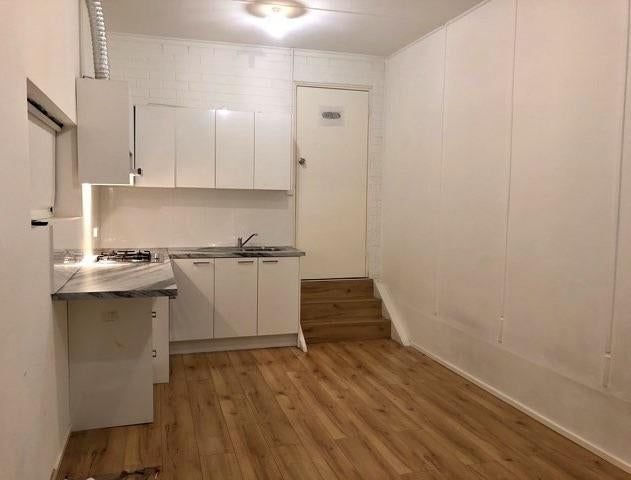
Here’s where it gets genuinely unfair, and it’s rarely disclosed clearly before move-in. A lot of buildings charge flat fees, trash, amenities, sometimes even a flat utility administration charge, regardless of unit size. A one-bedroom and a studio in the same building often pay the exact same flat amount for these line items.
Spread across square footage, that flat fee costs a studio resident significantly more per square foot than it costs their one-bedroom neighbor. It’s a small number on paper, usually, but it stacks month after month, year after year, in a way that quietly erodes whatever savings the lower base rent was supposed to provide. Studio Apartment Setup has compiled a list of the hidden costs most studio leases don’t mention upfront, and flat fee structures show up on that list more often than almost anything else.
If you’re still shopping for a unit, this is exactly the kind of thing to ask about directly rather than assume from the listing price, and Studio Apartment Setup’s checklist of things to verify before signing a lease covers a handful of these line items specifically.
4. The Mistake Almost Everyone Makes Trying to Save Money
Here’s the pattern I see most. People try to save money on furniture by buying cheap multi-functional pieces instead of well-made ones, assuming cheap-and-flexible beats expensive-and-fixed. Sometimes it does. More often, in a studio specifically, it doesn’t, because multi-functional furniture gets used twice as hard as single-purpose furniture would in a bigger home. A sofa bed that’s folded and unfolded daily wears out a lot faster than a sofa bed that gets used occasionally in a guest room.
That accelerated wear means a second purchase down the line, often within two or three years instead of the seven or eight you’d expect from full-size furniture used normally. The cheap option ends up costing close to what the well-made option would have, just spread across two purchases instead of one, with the inconvenience of replacing it baked in.
5. A Quick Look at Where the Money Actually Goes
Cost Category            Why Studios Pay More Per Square Foot
Rent per square foot      Priced for convenience, not discounted like larger units
Flat fees (trash, admin)  Same charge regardless of unit size
Multi-functional furniture  Mechanisms and engineering raise the price per piece
Furniture replacement     Daily heavy use shortens lifespan, leading to repurchases
Trial-and-error buying    Tight margins for error mean more returns and rebuys
None of these show up on a rent listing. All of them show up on a bank statement eventually.
6. Is There a Real Way to Bring the Cost Down?
Mostly, yes, and it’s less about cutting corners and more about sequencing. Measure carefully before buying anything, so the trial-and-error category shrinks to almost nothing. Buy multi-functional furniture once, well, rather than twice, cheap. Ask about flat fees directly before signing, since that number is often negotiable or at least disclosed honestly if you ask the right question instead of assuming it from the listing.
And weigh the studio against a one-bedroom honestly, not just on rent. Studio Apartment Setup’s comparison of studio versus one-bedroom living walks through that trade-off in more detail, including a few cost angles that don’t make it into most rent comparisons.
She ended up fine, by the way, the client from the start of this. It just took replacing a couple of pieces of furniture and renegotiating a building fee before the math actually lined up the way it should have from day one.
7. Questions People Ask Once the Bills Start Adding Up
Why does my rent look lower but my monthly spending feel about the same as my old place? Rent is one line item out of several, and studios tend to lose ground on flat fees and furniture costs in ways that quietly offset the lower base rent.
Are flat fees like trash or amenities really the same regardless of unit size? In most buildings, yes. These fees are usually set per unit, not per square foot, which means a studio pays the same dollar amount as a much larger apartment in the same building.
Is a Murphy bed or convertible furniture actually worth the extra cost? Often yes, if it’s well-made and gets you function you’d otherwise lose entirely. The math gets worse only when the cheaper version wears out fast and needs replacing within a couple years.
What’s the one cost people almost never budget for before moving in? Furniture replacement from trial and error. Measuring wrong once or twice in a tight space adds up faster than people expect, and it’s rarely included in any moving budget.
Does moving more often actually cost more money over time? Yes, noticeably. Studios tend to see higher turnover than larger units, and every move brings deposit costs, moving costs, and another round of furniture decisions that larger, more stable households simply don’t repeat as often.
If insurance is the next line item you’re trying to figure out, Studio Apartment Setup’s breakdown of what renters insurance actually covers in a small unit is a reasonable next read, since it’s another cost category that gets quoted flat regardless of how much space you’re actually insuring.