
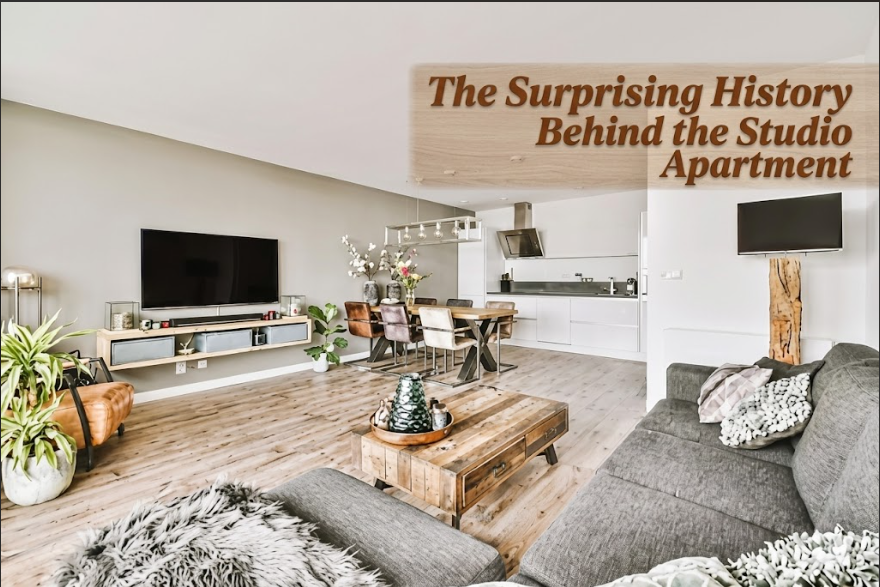
The thing that sent me down this rabbit hole was a Murphy bed conversation.
A client of mine, a graphic designer in her early thirties, had been going back and forth on whether to install one in her 420-square-foot Toronto unit. I told her Murphy beds had been purpose-designed for spaces like hers since before her grandmother was born. She looked at me like I’d just invented a fact on the spot. So I went back and actually traced it. The history of the studio apartment turns out to be stranger, more intentional, and more politically loaded than most people who live in one would ever guess.
What I found was this: the studio apartment has never been just a small apartment.
1. The Name Came From Art, Not Real Estate
The word “studio” didn’t start with residential leasing. It started with painters.
In 19th century Paris, working artists rented large open-plan spaces called ateliers, combining sleeping, living, and working in a single undivided room. These weren’t cramped. They were dramatic spaces, often with north-facing skylights and high ceilings, built to accommodate large canvases and the natural chaos of a creative life. The “studio” was not the compromise option. It was the professional’s choice.
When North American developers in the early 1920s started building small, open-plan urban units, they had a naming problem. “Efficiency apartment” was technically accurate but sounded like something a building manager would say. “Bachelor apartment” was useful but demographic. “Studio” offered something the others couldn’t: a cultural association with a person who had chosen a particular kind of life rather than accepted a limitation.
The word did real marketing work. And it still does, which is one of the reasons the name has outlasted every other label the format has accumulated over a hundred years.
2. The First Wave Was About One Thing: Privacy
The studio apartment as a market category crystallized in American cities in the 1910s and 1920s. Chicago, New York, and San Francisco were absorbing massive waves of new residents, and the existing infrastructure for single workers, the boarding house, was straining past the point of acceptability.
Boarding houses were communal by design. Shared kitchens. Shared bathrooms at the end of a hallway. A landlady who knew what time you came home. For a previous generation of urban workers, that had been tolerable. For the young professionals arriving in cities during the 1910s, it felt like an uncomfortable middle state between the family home they’d left and the autonomous adult life they were trying to build.
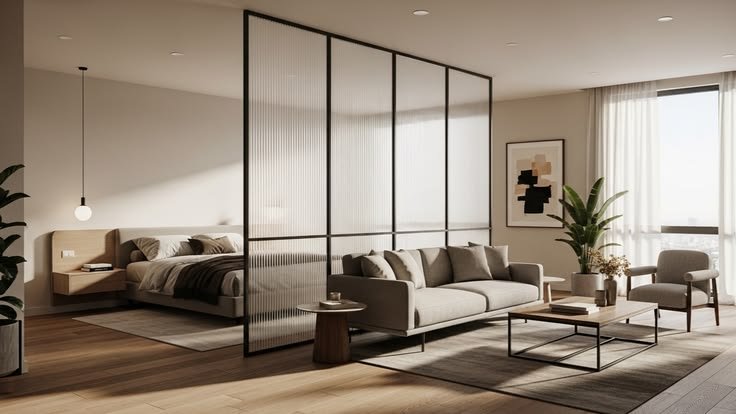
Developers saw an opening. The first purpose-built studio units appeared during this period: one main room with a folding bed, a kitchenette along one wall, a private bathroom. Small by any measure. But the pitch wasn’t about size. The pitch was that you had your own front door, your own key, your own life that nobody else was walking through to get to their room.
That framing mattered more than any square footage number.
3. The Murphy Bed Wasn’t a Workaround, It Was the Architecture
William Lawrence Murphy filed his first patent in 1911. He was living in San Francisco, in a one-room apartment, and wanted a way to convert his sleeping space into a room he could actually use during waking hours. The story most often cited is that he was courting a woman and the sleeping arrangements made the situation complicated. Whether that detail is precisely accurate, or just a good story that stuck, the design problem he was solving was completely real.
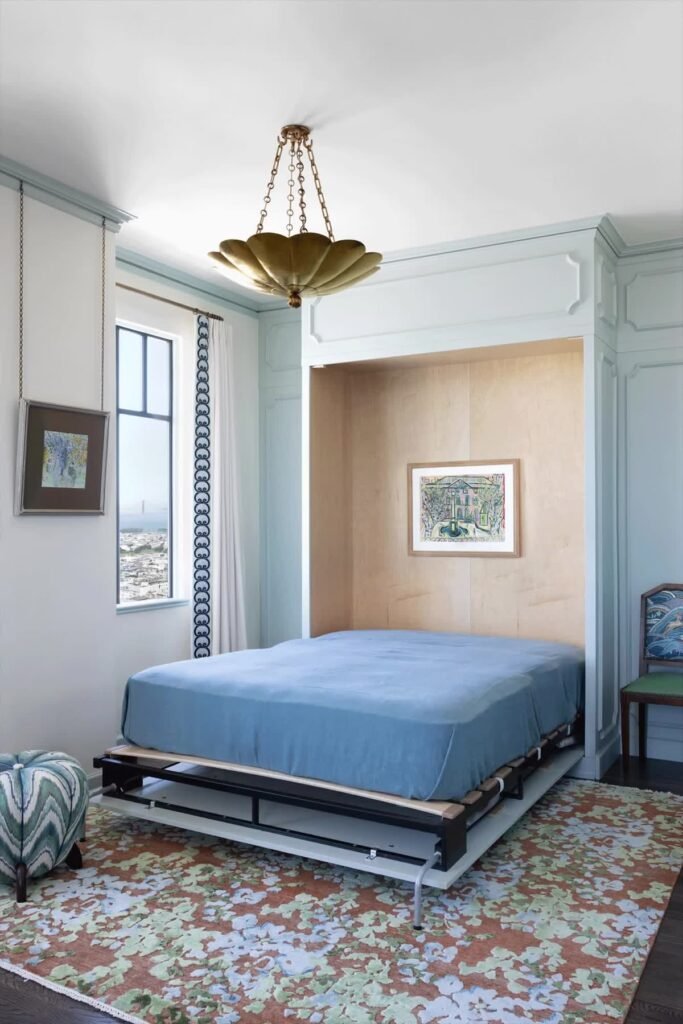
Buildings were designed around it. Niches were constructed to receive it. The surrounding cabinetry, folding desks, and integrated shelving weren’t added afterward. They were part of the original design.
The honest breakdown of whether a Murphy bed is worth it on Studio Apartment Setup is a useful place to land if this history makes you want to revisit the conversation for your own space. The logic from 1911 transfers fairly directly.
4. The Postwar Era Accidentally Demoted the Studio
The Second World War and its aftermath did something to the studio apartment’s cultural standing that took decades to undo.
Returning soldiers, federally subsidized mortgages, and a powerful political mythology around the single-family suburban home reshaped what residential success was supposed to mean. The suburb became the aspiration, the city became where you lived until you could afford the suburb, and the studio became where you lived until you could afford the city apartment. It got stacked into a hierarchy it had never belonged to before.
The language shifted to match. The word “transient” started appearing in planning documents and developer conversations about studio tenants, carrying the implication that these were people on their way somewhere else, not people who had arrived anywhere.
And yet, through all of this, architects continued designing some extraordinarily thoughtful small-space solutions. Japan, operating under completely different cultural assumptions about the relationship between space and dignity, was developing its own parallel tradition of compact urban housing. I’ve thought about this contrast a lot. The same spatial constraint, radically different cultural framing. How Japan built an entire approach to living well in small spaces covers the specifics far better than I can summarize here, but the comparison is worth sitting with.
5. Three Things That Changed the Conversation in the Past Three Decades
The reversal in how studios are understood happened gradually, and it wasn’t driven by taste alone.
The first factor was price. Urban real estate in Toronto, Vancouver, New York, and San Francisco reached a point where studio apartments stopped being the affordable option in any meaningful sense. When a 400-square-foot unit costs what a detached house cost a generation ago, the “lesser” framing starts to fall apart under its own weight. The market reassessed before the culture did.
The second factor was remote work. A studio that functioned as a place to sleep and leave from was a different object than a studio that had to function as an office, a gym, a kitchen, a living room, and a bedroom simultaneously. That shift forced a real design conversation about what small spaces actually needed to do, and that conversation has produced better solutions. Setting up a real home office in a studio is a problem that didn’t exist for most of the 20th century in the way it does now.
The third factor is the one I find most interesting, and probably the least talked about directly. The cultural language around small spaces changed. Minimalism became a mainstream aspiration rather than a professional design concept. “Intentional living” became a phrase people used without embarrassment. Small was reframed as edited. Studio apartments didn’t earn this moment so much as find themselves positioned to receive it, but the positioning held.
Studio Apartment Timeline: A Century of Small Urban Living
ERA           WHAT WAS HAPPENING
---------------------------------------------------------
1880s-1900s   Parisian artists develop the open-plan
              atelier as a combined work and living
              space. The "studio" aesthetic emerges
              as professional and intentional.

1910s         First purpose-built small apartments
              appear in American cities. Private
              front door, private bath, kitchenette.
              Marketed as autonomy, not affordability.

1911          William L. Murphy patents the folding
              wall bed in San Francisco. Early
              studio layouts are designed around it,
              not retrofitted for it.

1920s-30s     "Bachelor apartment" becomes the
              dominant marketing term. Targeted at
              single young professionals in urban
              cores. Perceived as a chosen lifestyle.

Post-WWII     Federal housing policy accelerates
              suburbanization. Studio repositioned
              as transitional, pre-family housing.

1950s-60s     "Bachelor pad" peaks as a cultural
              concept. Small urban living tied
              to pre-adulthood, not preference.

1970s-80s     Studios increasingly associated with
              affordability over choice. "Efficiency
              apartment" common in market listings.

2000s-10s     Rising urban real estate costs begin
              price correction. Micro-apartment
              movement emerges globally.

2012          New York City's adAPT competition
              tests units below the 400 sq ft
              minimum, signaling policy shift.

2020s         Remote work and minimalism culture
              converge. Small urban living
              reframes as deliberate and designed.
---------------------------------------------------------
What I keep coming back to is how much the studio apartment’s reputation has never really been about the apartment. The space itself hasn’t changed. One room, a kitchen, a bathroom, a door. What changed is what it meant to live that way, and who got to decide that meaning.
An artist in 1890s Paris and a software developer in 2025 Toronto can be making the same fundamental choice, a particular kind of city life, in a particular kind of space, with everything organized around it. The anxiety about whether it’s enough, and the pleasure in proving that it is, those things haven’t changed much at all.
If you’re somewhere in the middle of that question right now, the studio vs. one-bedroom comparison at Studio Apartment Setup approaches it from the practical side, which is probably where most people need to land after the history.
FAQs
Is a studio apartment the same as an efficiency apartment? Not technically, though the terms get used interchangeably in most markets. A studio refers to any open-plan unit where the main living and sleeping areas share a single room. An efficiency specifically implies the kitchen is integrated into the main living space rather than in a separate alcove or room. Every efficiency is a studio. Not every studio is technically an efficiency, since some have a separate kitchen or a partial wall separating the sleeping area.
Did the Murphy bed actually originate in San Francisco? The commonly accepted account places William Lawrence Murphy in San Francisco around 1900 to 1911, where he developed his folding wall bed concept before moving to New York and filing formal patents beginning in 1911. The company he founded still operates. The exact circumstances of the invention are part confirmed history, part good story, but the location, timing, and patent record are not disputed.
When did “bachelor apartment” fall out of use? The term was common through the 1960s and into the 1970s, tied to a specific cultural moment around urban single-male professional life. By the 1980s it had faded as the demographics of small apartment residents diversified and the marketing language shifted. “Studio” became the default term in most North American markets, with “efficiency” surviving in some regional markets.
Did studios always have private kitchens? Not in the earliest versions. First-generation bachelor apartments in the 1910s and 1920s often had very basic kitchenettes, sometimes just a two-burner gas ring, a small icebox, and a sink, rather than full cooking facilities. Building codes across North American cities evolved through the mid-20th century to require more complete kitchen facilities in residential units, and today’s studios are built to standard kitchen code requirements in most jurisdictions.
What is the “micro-apartment” movement and when did it start? The formal policy conversation around very small units under 300 square feet accelerated in the 2010s in cities like New York, where minimum size regulations had been in place since the 1950s. The 2012 adAPT competition invited designers to propose units below the 400 sq ft minimum, making the conversation visible at a policy level. The underlying concept of compact urban housing, though, had been standard in Tokyo, Hong Kong, and Paris for decades before it got a name in North America.