
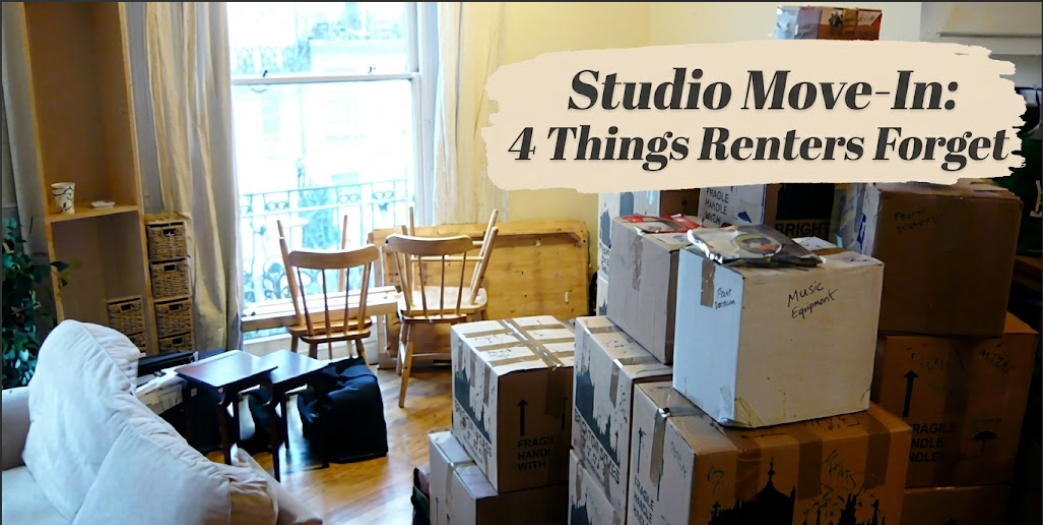
Everyone assumes a studio move-in is the easy version. Less square footage, fewer rooms to manage, not as much to think through. I used to hear that almost every time a client came in for a small-space consultation, and honestly I understood the logic. A studio is just one room, right? How complicated can it be?
Pretty complicated, as it turns out. Not in the dramatic, structural way that a full renovation can be complicated. In a quieter, more frustrating way. Studios have their own category of overlooked detail, the kind that doesn’t show up until you’re already living there and the options to fix it without stress have narrowed considerably.
Four of them come up constantly. And unlike furniture choices or paint colours, these aren’t things you can easily revisit once the boxes are unpacked.
1. The Building Will Not Tell You What Won’t Fit Through the Door
The sofa situation is something I’ve witnessed more than once. A client orders a beautiful piece, the movers arrive, and the elevator is too narrow. Or the doorway clearance is tighter than expected. The sofa sits in the lobby for two days while everyone figures out what to do next.
Studio buildings, particularly older urban mid-rises, often have elevators that measure 36 to 42 inches wide and 48 to 60 inches deep. That sounds workable until you’re trying to move a sectional with a chaise attachment through a 30-inch clear door opening. Most studio unit doorways run 28 to 32 inches usable gap, meaning the actual opening after the door is pushed back, not the door panel itself.
Before any furniture is purchased, measure three things. The elevator interior. The hallway width between the elevator and the unit door. And the clear opening of the door into the apartment. Write those numbers down and check every large piece against them before you click buy.
Anything that cannot be disassembled and is wider than 29 inches is a real risk. Platform bed frames are usually fine because most ship flat in boxes. Sectionals are almost always a problem. Large upholstered headboards that are integrated into the frame, same story.
The building won’t volunteer any of this information. It’s a question you have to ask, and the landlord questions guide at Studio Apartment Setup runs through exactly what to raise before you book the moving truck.
2. The Windows Are Bare and You Will Find Out Immediately
Renters assume the unit is ready to live in. And by certain measures, it is. Appliances, running water, working light switches. What most rental units, especially newer builds, do not include is anything on the windows. No blinds. No curtains. No shade of any kind.
In a regular two-bedroom apartment, bare windows in the living room are inconvenient. You close the bedroom door and sleep fine. In a studio there is no bedroom door. The whole space is the bedroom and the living room and the office. At 6:30 in the morning when the sun comes through, or the building across the alley lights up at 2 a.m., there is nowhere to escape it.

Blackout roller shades are the most practical choice for studios. They stack cleanly at the top when raised, take up minimal visual space, and do the job for both privacy and light control. Curtain panels work if you prefer the look, but the rod and brackets need to be mounted before move-in day, not after. Installing hardware with boxes everywhere is a much worse experience than doing it on an empty wall.
Window coverings take time to arrive. Custom sizes especially. Standard sizes still need to be measured and confirmed before ordering. Budget at least two weeks between measuring and having them installed. Order before you move in, even if they arrive a few days after. Have a temporary stick-on shade from the hardware store ready for the first few nights.
This is part of a broader light management conversation that matters a lot in studios. The lighting piece at Studio Apartment Setup gets into why studios tend to get light wrong, and window treatment choice feeds directly into that.
3. Outlets Are Fixed, and Your Furniture Plan Probably Hasn’t Accounted for That
Rental units come with outlets where they came with outlets. You cannot move them. And they are rarely in the spots that make furniture arrangement intuitive.
The problem surfaces when the logic of where furniture should go and the logic of where the power is don’t align. The wall that makes the most sense for the bed might put the nearest outlet on the wrong side, four feet from where the lamp, phone charger, and white noise machine all need to be. The arrangement that works visually might leave a cord crossing open floor space because the TV outlet is on the wrong end of the wall.
And this, honestly, is where a lot of studio spaces quietly fall apart. A long extension cord running across 400 square feet is a tripping hazard and it visually breaks the space in a way that’s hard to undo. It also signals that the furniture plan wasn’t thought through from the ground up, which affects how the whole room feels even if you can’t immediately name why.
Before move-in, do a walkthrough specifically to document outlet locations. Every single one. Then map them against where you actually need power: bedside, desk, TV wall, kitchen counter. If there’s a mismatch, that’s something to fix in the furniture plan, not by buying a longer extension cord.
Short surge protector strips are fine. They’re necessary. A single strip within reach of the bed is not the same as an orange cord taped along the baseboard for six feet. One of those is a solution, the other is a problem you’ve decided to live with.
4. The Entry Zone Won’t Exist Unless You Build It First
A studio has no foyer. No hallway, no buffer between outside and inside. You open the door and you’re already there.
Which means every coat, bag, pair of shoes, and piece of mail lands wherever the momentum of walking inside takes it. Coat on the nearest chair. Keys on the counter, or on the bed, or somewhere in the general vicinity of where your hand was when you finally put things down. Mail on whatever flat surface was closest.
In a larger home, this kind of chaos stays contained to one room. In a studio, where everything is visible from everywhere else, it radiates. The disorder at the door becomes the visual tone of the whole space, and it happens fast.
The fix is simple. It just has to be decided before you move in. Carve out 12 to 18 inches just inside the door and call it the entry zone. A narrow floating shelf at around 54 inches from the floor, two or three hooks below it, a small tray or divided organizer for keys and cards. That’s it. It doesn’t need to be elaborate or expensive. It needs to be decided.
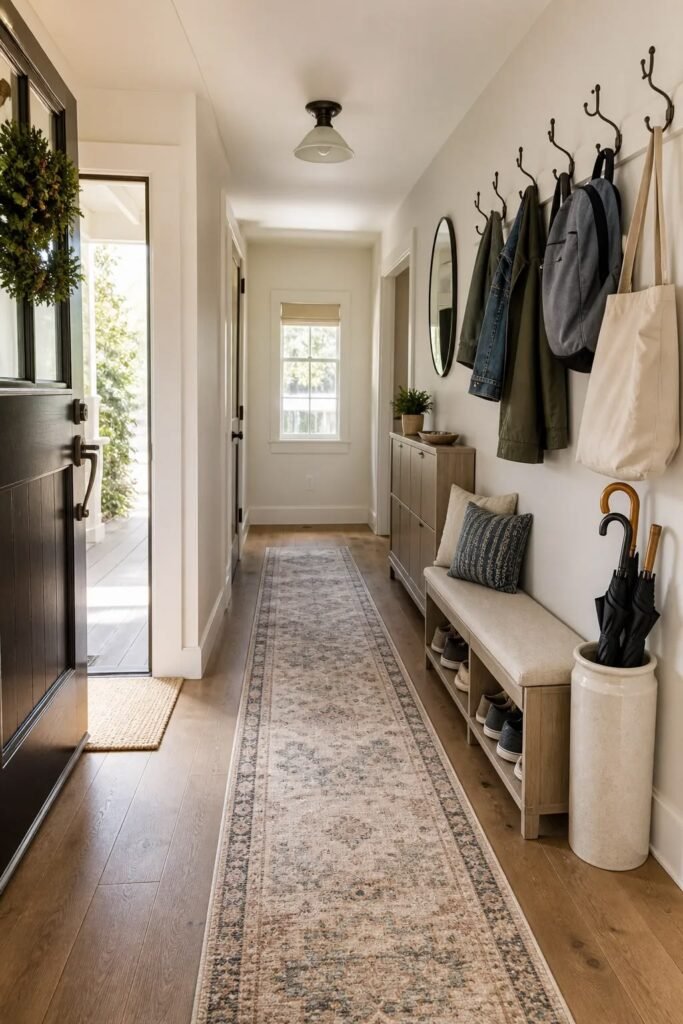
Because the alternative is not “a little messy.” The alternative is that the door area becomes the default dump zone, and in a studio, that means the whole space feels like it never quite got organized. Not because you’re disorganized, but because there was no designated place for things, and things go wherever there’s room.
Zone thinking for studios is something Studio Apartment Setup covers in depth, and it doesn’t require walls or room dividers to work. The entry zone is the first application of that logic. And it’s the one with the most immediate payoff.
At-a-Glance: Pre-Move-In Checklist for Studio Renters
BEFORE MOVING DAY
-------------------------------------------------------
FURNITURE DELIVERY
[ ] Measure elevator interior (width x depth)
[ ] Measure hallway from elevator to unit door
[ ] Measure door clear opening (usable gap, not panel)
[ ] Confirm oversized pieces ship or break down flat

WINDOW COVERINGS
[ ] Measure every window before ordering
[ ] Order at least 2 weeks ahead of move-in date
[ ] Mount curtain rod hardware before boxes arrive
[ ] Keep a temporary stick-on shade for day one

OUTLET PLANNING
[ ] Walk through and document all outlet locations
[ ] Map outlets against planned furniture placement
[ ] Identify bedside, desk, TV, and kitchen power needs
[ ] Adjust furniture plan where outlet access is poor

ENTRY ZONE
[ ] Designate 12-18 inches just inside the front door
[ ] Source hooks, tray, or narrow console in advance
[ ] Decide before move-in day, not after
-------------------------------------------------------
None of this requires a big renovation decision or a significant budget. It requires thinking about the right things before you’re standing in an empty room with a moving van idling outside. Because once you’re in, once the boxes are stacked and the furniture is placed and you’ve got somewhere to sleep, these logistical gaps become inconveniences you work around. And in a small space, working around inconveniences gets old quickly.
If you’re still in the pre-signing stage, the 5 Things to Check Before You Sign a Studio Lease guide covers what to look at before you commit to the unit. Some of what’s on this list, specifically window coverings and outlet placement, is worth knowing about the unit before you sign, not just before you move in.
FAQs
Do I really need window coverings ready for day one, or can I manage for a few days? You can manage, but a few days tends to become a few weeks. A temporary stick-on roller shade from a hardware store buys you privacy while proper coverings are on order. What doesn’t work is just assuming you’ll deal with it. Order the actual shades or curtains before moving day, even if they arrive after you do. The first morning of bad sleep from early light is usually enough to make this a priority.
What types of furniture are safest to buy knowing elevator clearance can be an issue? Anything that ships disassembled or breaks into sections. Bed frames that arrive in flat-pack boxes are almost always fine. Sectionals are the highest-risk purchase because the individual sections are still large and the combined piece rarely turns corners cleanly. If you’re not sure, call the retailer before buying and ask for the packaged box dimensions, not the finished product dimensions. Those numbers tell you what the movers are actually working with.
My unit has one outlet on each wall and that’s it. How do I plan around that? Four outlets in a typical studio is workable, but it requires mapping your power needs before placing furniture. Identify the two heaviest-use areas, usually bedside and desk, and make sure those walls have coverage. A short surge protector strip fills in the gaps. The problem isn’t limited outlets per se. It’s when your furniture plan puts all the power demand on one wall and leaves you routing cords across open floor space to reach it.
How small can an entry zone actually be and still work? Smaller than you think. A floating shelf 12 inches deep at about 54 inches from the floor with two or three hooks below handles the core functions: keys, bag, coat. If you have 18 to 24 inches of wall depth available, a narrow console table under 14 inches deep gives you surface and potentially a drawer. You are not building a mudroom. You are building a habit, which is the part that matters.
Is it worth doing a pre-move-in walkthrough specifically to map outlet and window dimensions? Yes. Most landlords will allow a short walkthrough between signing and move-in if the unit is already vacant. Bring a measuring tape, something to write with, and a basic floor sketch. Document every outlet location, measure every window, measure the door and elevator if you haven’t already. Twenty minutes in an empty apartment on a Tuesday afternoon will save you considerably more time and frustration later.